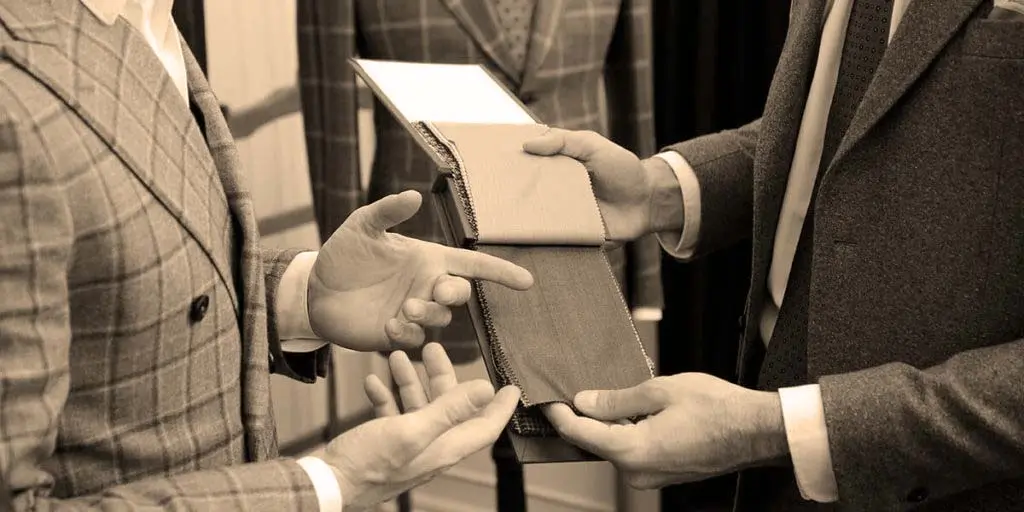
Fabric selection is one of the most important, and most overlooked, decisions when buying a suit. Most people walk into a store, like the way something looks on a hanger, and move on. But what it’s made of determines how it fits, how it feels, how long it lasts, and how it performs in real life.
Polyester and wool dominate most purchasing decisions. Here’s how they actually stack up.
What Are These Fabrics Anyway?
Wool: The OG of Suiting Fabrics
Wool has been the foundation of tailoring for centuries, and for good reason. It’s a natural fiber that breathes, regulates temperature, and drapes with an elegance that synthetic materials consistently fail to replicate. Wool suits age gracefully. They respond to pressing, develop character over time, and give a skilled tailor material they can truly work with.
Polyester: The Modern Contender
Polyester is a synthetic, petroleum-based fabric engineered for durability and affordability. Modern polyester has improved significantly. There are blends today that are far better than what existed twenty years ago. But fundamental differences in feel, breathability, and long-term performance remain.
Point-by-Point Comparison
Breathability and Comfort
Wool wins here, and it’s not particularly close. Natural fibers are porous. They move air, wick moisture, and regulate body temperature. Polyester traps heat. In Florida, this matters considerably more than it does in cooler climates.
Fit and Drape
Wool drapes naturally and molds to the body over time, creating elegant, clean lines. Polyester hangs more stiffly and can appear boxy or artificial, particularly in lower-thread-count blends.
Appearance and Texture
Wool has subtle surface variation and a matte richness that photographs and reads as expensive. Most polyester has a shinier finish that can look cheap under certain lighting, regardless of the price tag.
Durability and Longevity
A quality wool suit, properly cared for, can last decades and actually improves with age. Polyester resists wear initially but tends to pill, lose its shape, and degrade under heat, particularly around the seat and knees.
Maintenance
Wool requires dry cleaning and careful storage. Polyester is more forgiving. It’s often machine washable and resistant to wrinkling. For suits that get heavy use or need frequent cleaning, this matters.
Cost
Wool demands a real investment. Polyester suits are significantly more affordable. A well-made polyester-blend suit at $400 will outperform a poorly made wool suit at $600, so price alone isn’t the guide.
What About Blends?
Wool-polyester blends (commonly 70/30 or 60/40) occupy a useful middle ground. You get some of wool’s breathability and drape with polyester’s wrinkle resistance and lower maintenance. For travel suits or everyday work wear that needs to hold up to heavy rotation, a quality blend is a reasonable choice.
When to Choose Wool
- You want a garment that improves with age
- You’re dressing for important occasions where presence matters
- You’re making a significant investment in something you’ll wear for years
- You want a tailor to be able to really shape and work the cloth
When Polyester Makes Sense
- You’re on a budget and need something functional now
- You wear suits rarely and don’t need longevity
- You travel constantly and need something nearly indestructible
- You need a specific functional garment for a single event
A Realistic Wardrobe Perspective
Most people don’t need an exclusively wool wardrobe. A hybrid approach works well for most clients: a polyester-blend suit for heavy travel rotation, a classic wool for significant meetings and events. What you want to avoid is buying a polyester suit thinking it’ll last as long as wool, or buying wool and neglecting the care it requires.
The Sustainability Angle
Wool is biodegradable and renewable when responsibly sourced. Polyester is petroleum-based, doesn’t decompose, and represents the material backbone of fast fashion. If environmental impact is part of your purchasing decision, wool is the clearer choice.
The Bottom Line
Polyester blends serve a purpose, and there are contexts where they’re the right call. But wool is almost always worth the investment for anyone building a wardrobe they want to last. The difference in how it looks, feels, and wears over time is real, and once you’ve had a properly built wool suit on your body, you’ll feel the gap immediately.
Curious about what fabrics work best for your climate and lifestyle? Let’s talk.