The First-Fit Garment
Want to see the fit before your cloth is cut? I can have a test version of your garment made from your pattern in inexpensive cloth. You try it on, I mark the changes, and your pattern is corrected before your real cloth is cut. It is optional and adds two to three weeks. A two-piece is $300 (jacket $215, trousers or vest $120, three-piece $385). Every American Made order includes one.
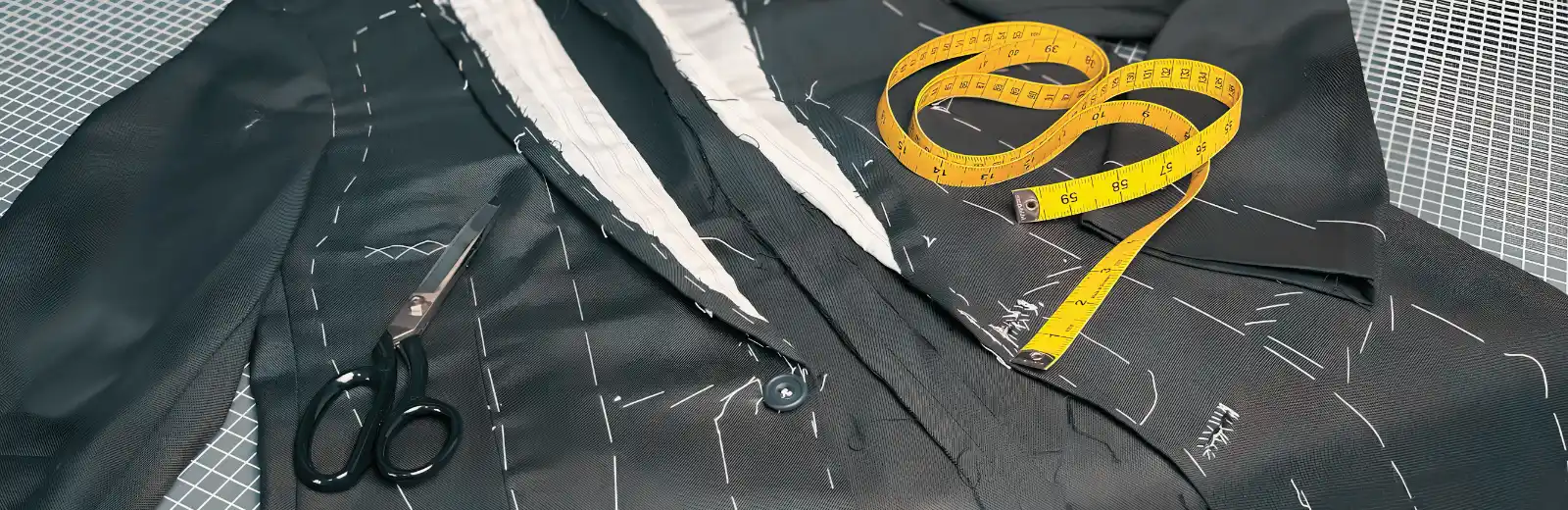
How the first-fit garment works.
Draft the pattern
Your measurements and posture notes become a 2D paper pattern. This is the blueprint, not yet tested on a real body.
Build the prototype
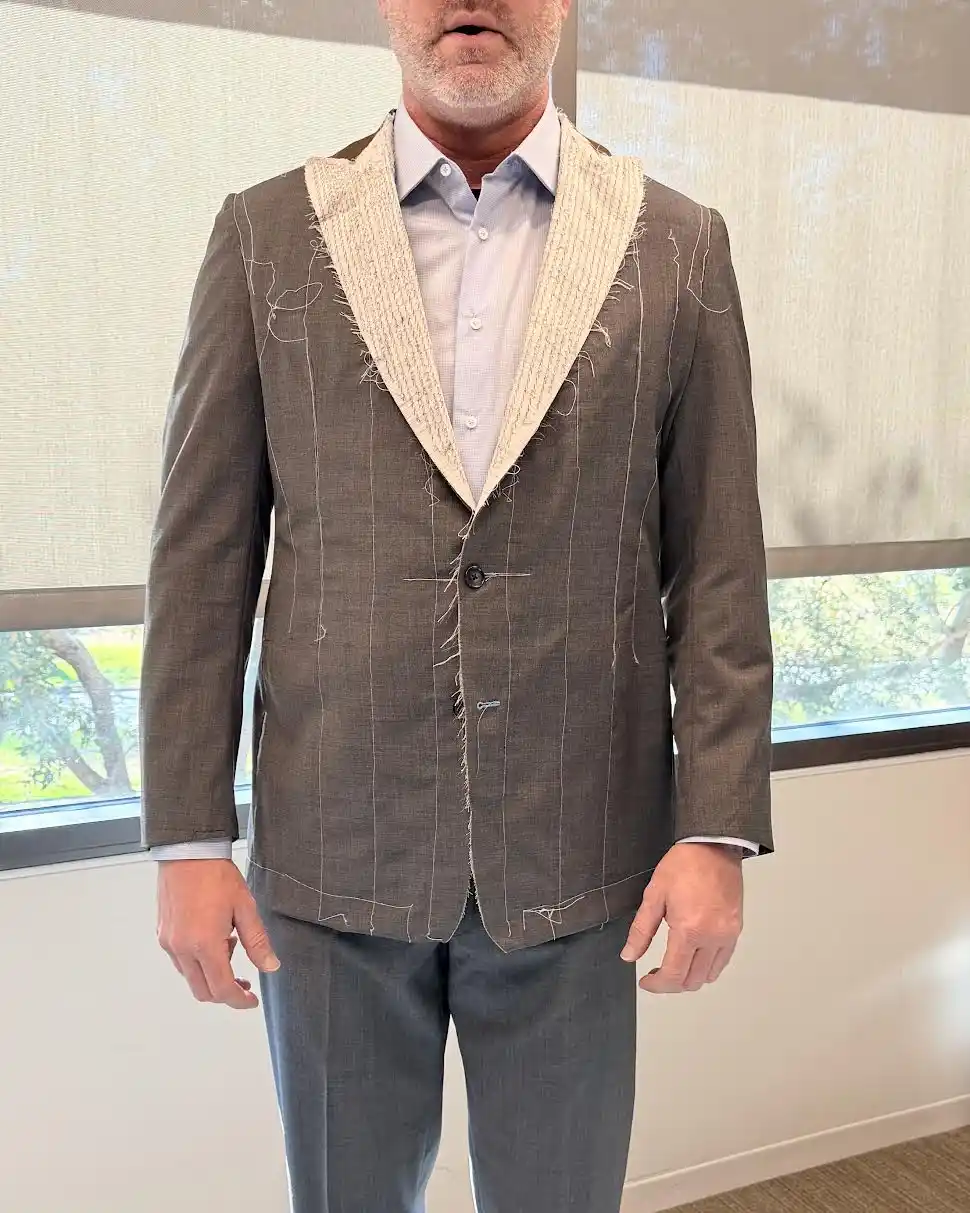
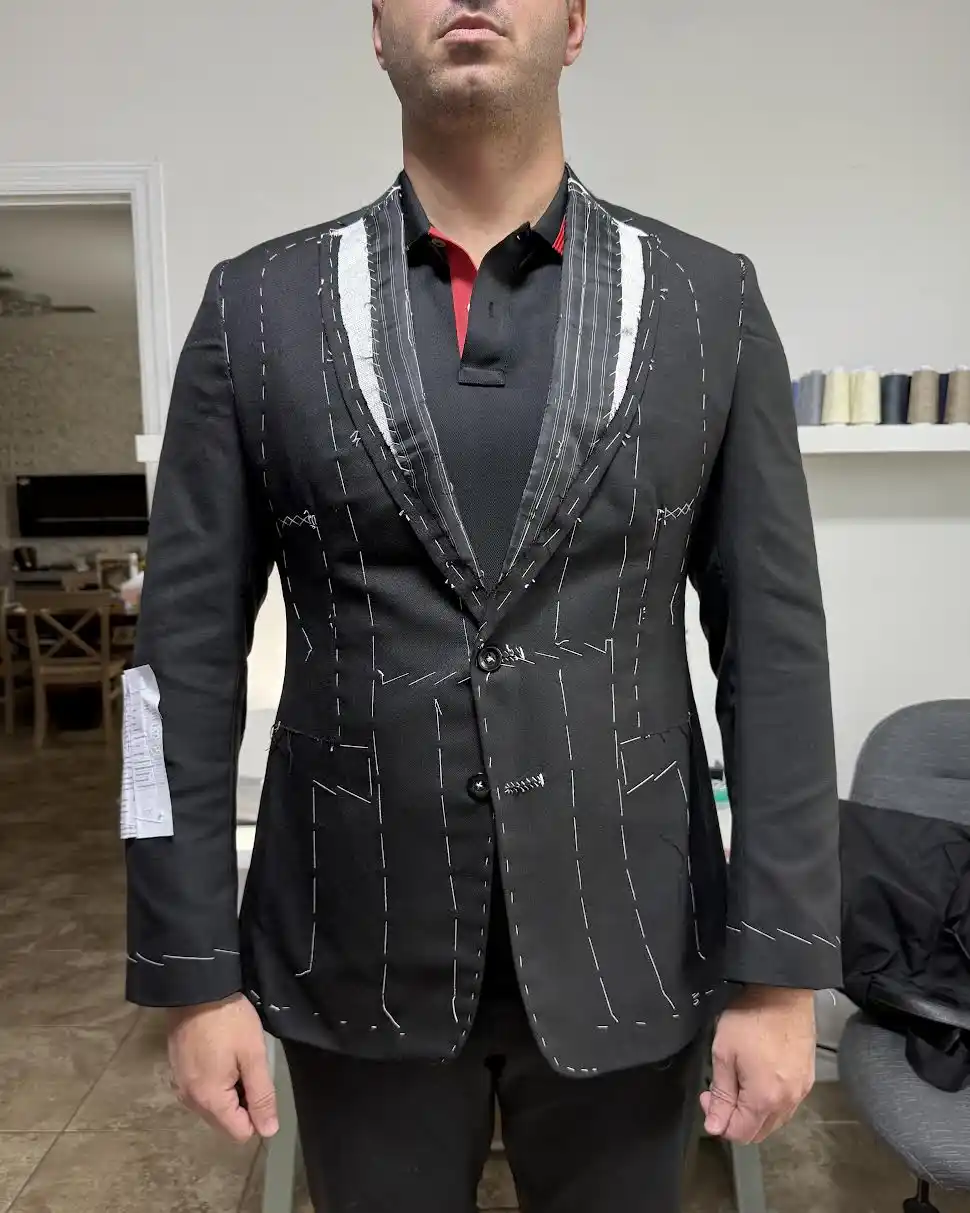
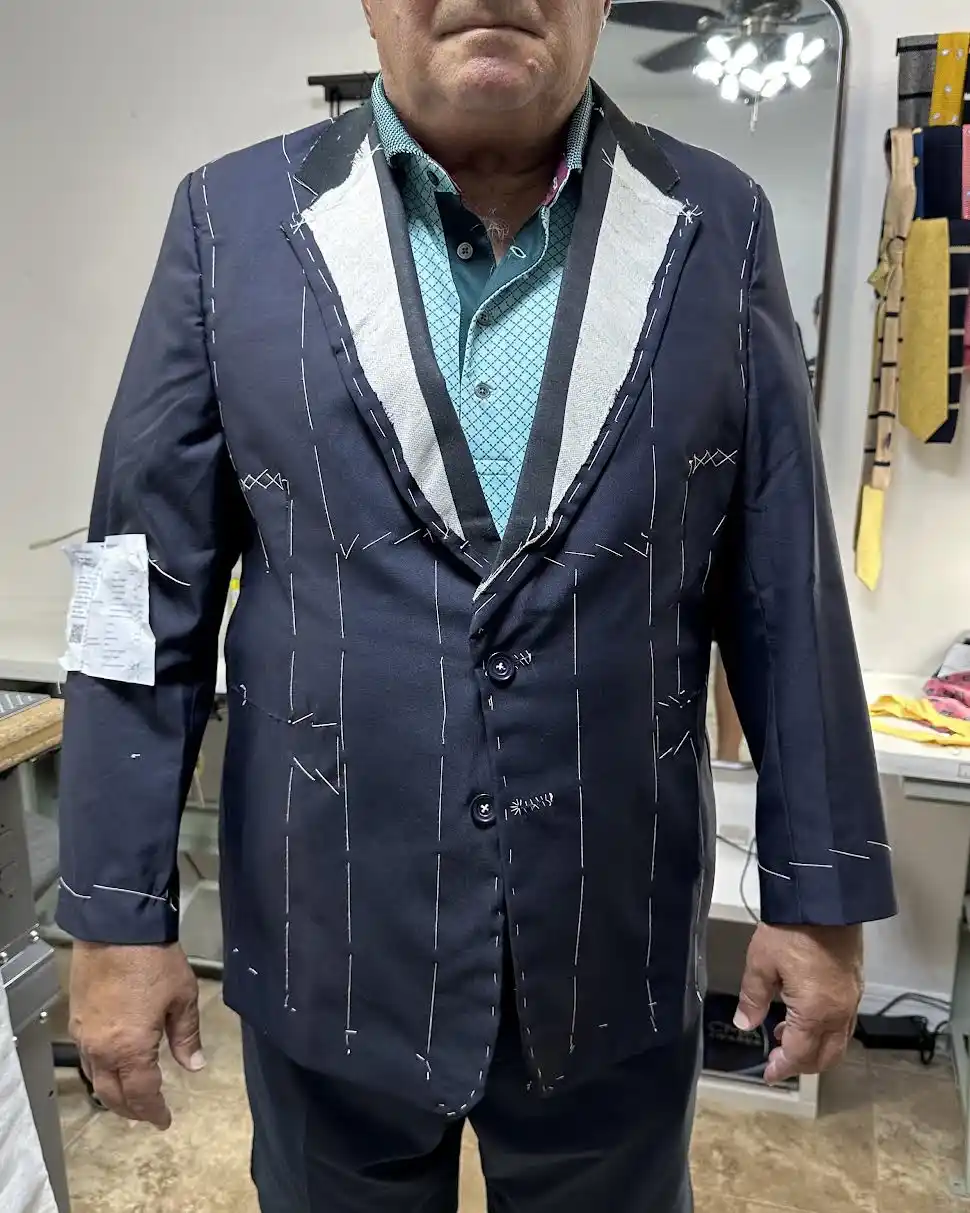
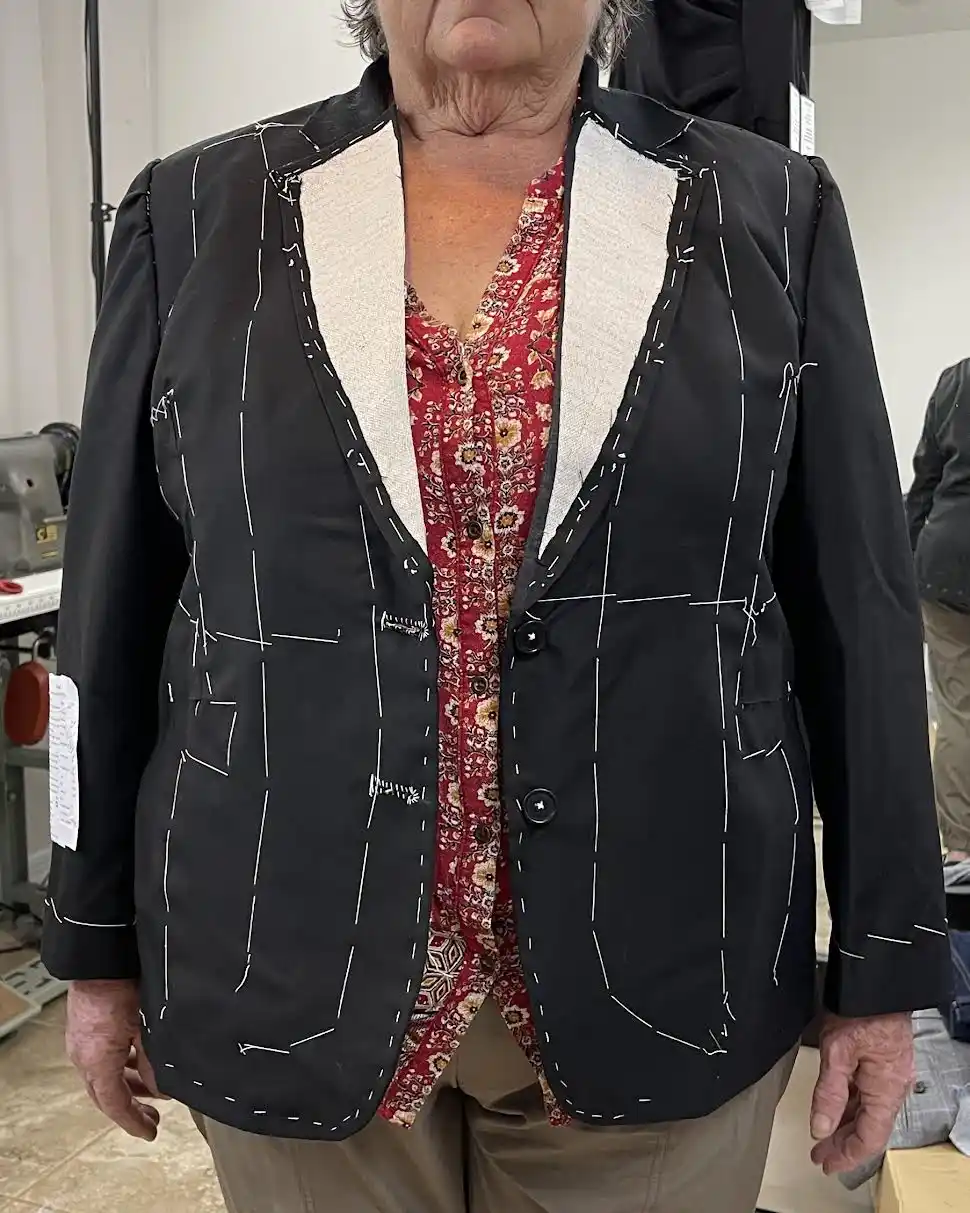
The pattern is cut from inexpensive cloth and assembled loosely into a test version: raw edges, visible stitching, no finishing.
Read the fitting
The first-fit garment goes on your body. Balance lines, fabric tension, and posture are assessed. Every wrinkle is a data point. Chalk marks and pins record what the measurements alone could not predict.
Strike the final pattern
The first-fit garment is taken apart. Every correction is transferred to the paper pattern. Only now, with a verified pattern, is your cloth cut.
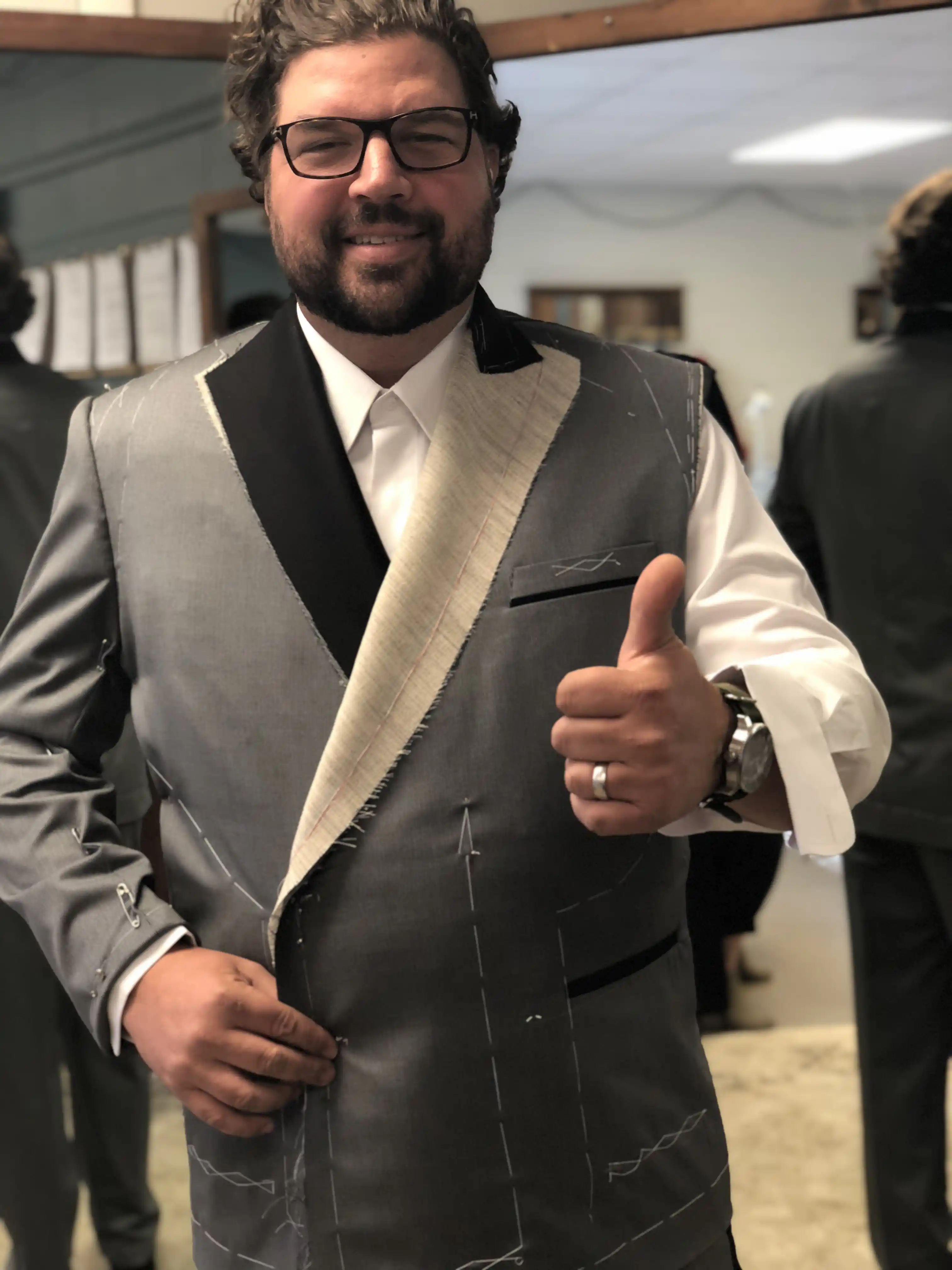
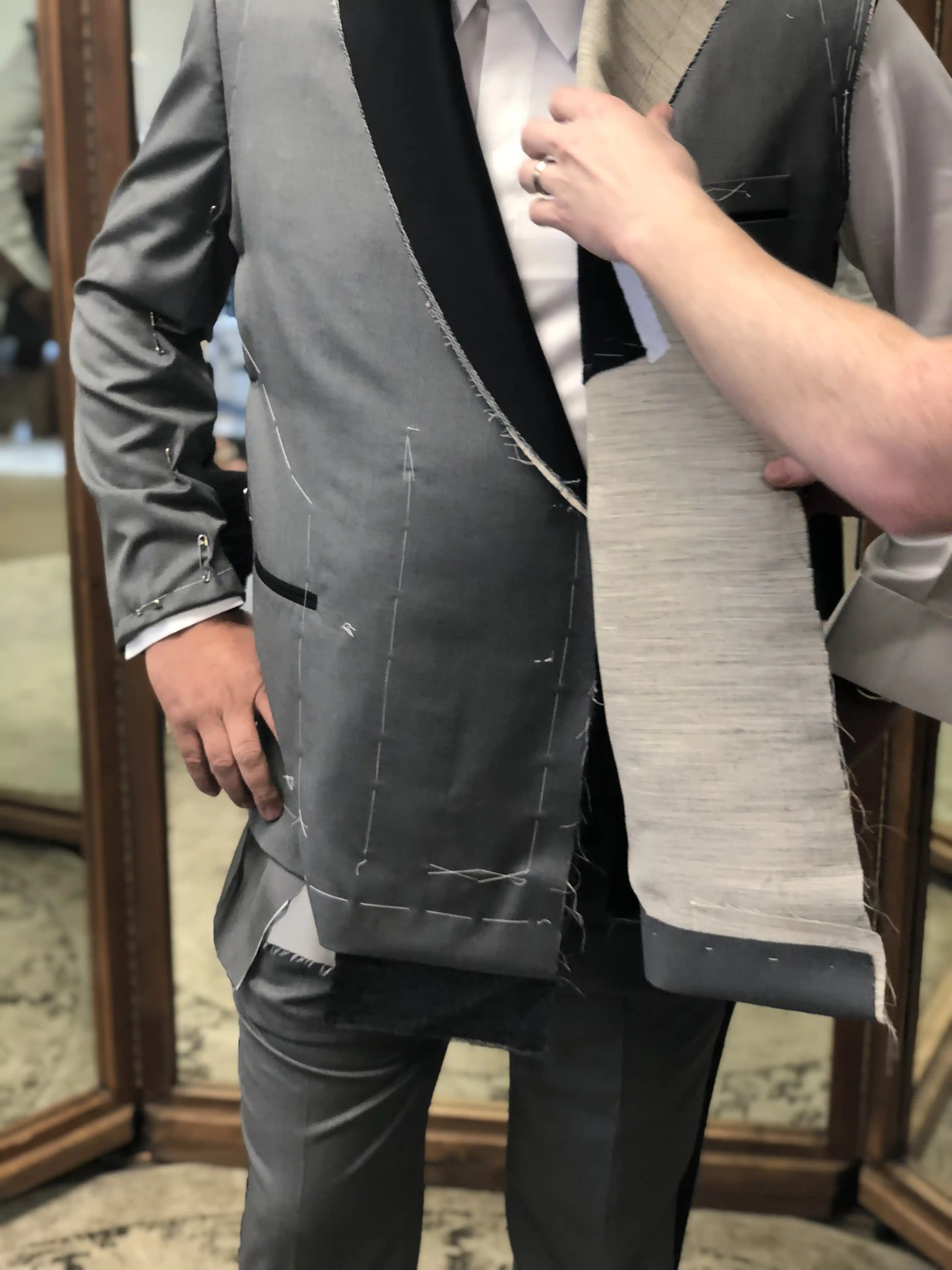
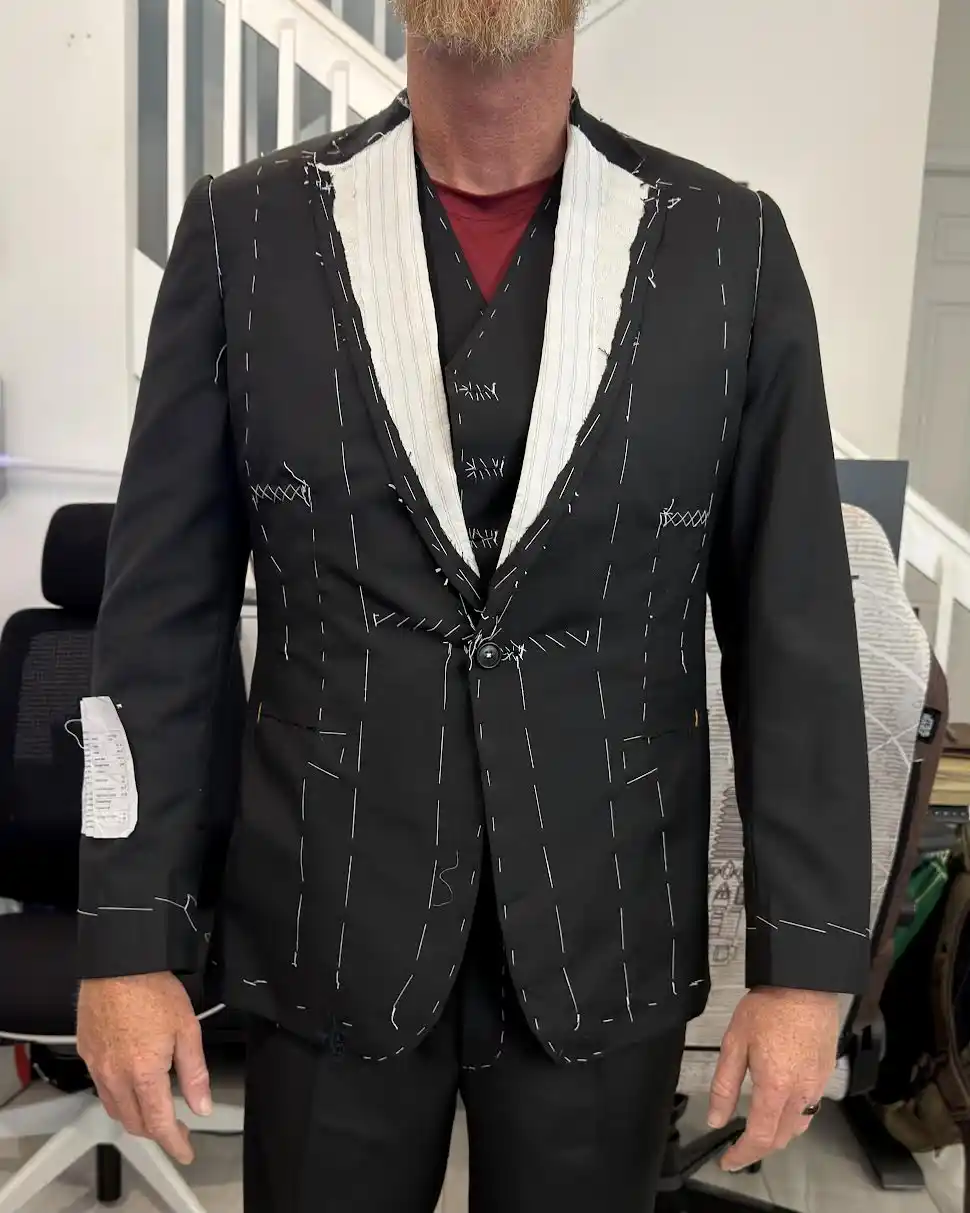
Measurements tell you what. The first-fit garment tells you how.
A measurement sheet is precise, but it is two-dimensional data describing a three-dimensional body. It captures lengths and circumferences; it cannot capture how a particular client holds their shoulders, whether their posture pushes the chest forward, or how their right side differs from their left. No set of numbers fully predicts how cloth will behave on a specific human body under gravity. That is what the first-fit garment is for.
The first-fit garment, assembled loosely from inexpensive cloth, goes on the client before the real wool is ever unrolled. Because the cloth has no structure and no finish, it hides nothing. Wrinkles read as arrows: a diagonal pull across the shoulder blade means the jacket is too tight there; vertical pooling under the seat means the trouser needs more room. The tailor uses chalk and pins to mark every correction directly onto the cloth: slashing open tight seams, pinning out excess, sketching new lines on the prototype itself. The first-fit garment becomes a physical record of everything the measurement sheet could not predict.
After the fitting, the first-fit garment is taken apart panel by panel. Every chalk mark and pin adjustment is transferred directly onto the paper pattern, producing a corrected master pattern that now accounts for your actual posture, your actual proportions, and every asymmetry the fitting revealed. Only then, with a pattern that has been physically verified on your body, is the real cloth cut. For clients in Fort Myers, Naples, and across Southwest Florida who add it to their commission, this is the process that makes the difference between a suit that fits and a suit that looks like it was always supposed to be on you.
Questions about the first-fit garment process.
Do all clients receive a first-fit garment fitting?
No. It is an optional add-on, available on any tailored garment at extra cost. It is not required, but clients who want pattern-certainty before their cloth is cut can elect to add it. We will discuss whether it makes sense for your specific commission at the initial consultation.
How long does the first-fit garment stage add to the timeline?
Typically two to three weeks. The first-fit garment is assembled, a fitting is scheduled, corrections are transferred to the paper pattern, and only then is the final cloth cut. For a garment in fine cloth, this is not time added. It is risk removed. The alternative is cutting expensive wool on a pattern that has never been tested on your body.
What happens to the first-fit garment after the fitting?
It is disassembled. The individual chalk-marked and pinned panels are laid over the original paper pattern, every adjustment is traced through, and a corrected master pattern is produced. The inexpensive cloth itself is discarded. It has done its job. The corrected paper pattern stays on file and serves as the starting point for every garment we build for you after the first.
How is this different from just doing alterations after the final garment is made?
The first-fit garment catches fit problems before your real cloth is cut, when fixing them costs nothing but time. That includes the ones alterations can't reach. A tailor can let out a seam, shorten a hem or take in the waist of a finished garment, but can't move the shoulder seam, correct the balance or fix a structural problem without rebuilding the jacket.
The work.
Optional add-on · By appointment