Your wedding day is one of the few occasions in your life where the photographs matter as much as the moment itself. The clothing you choose will be documented in images you’ll look at for the rest of your life, which means it’s worth getting right.
This is part one of a two-part guide. Here we cover the fundamentals: dressing for the season and temperature, your groomsmen, and fit.
Dressing for the Temperature
The most overlooked factor in wedding attire planning is the weather. A tuxedo that looks sharp in a climate-controlled ballroom can become miserable at an outdoor ceremony in summer heat.
Spring and Summer Weddings
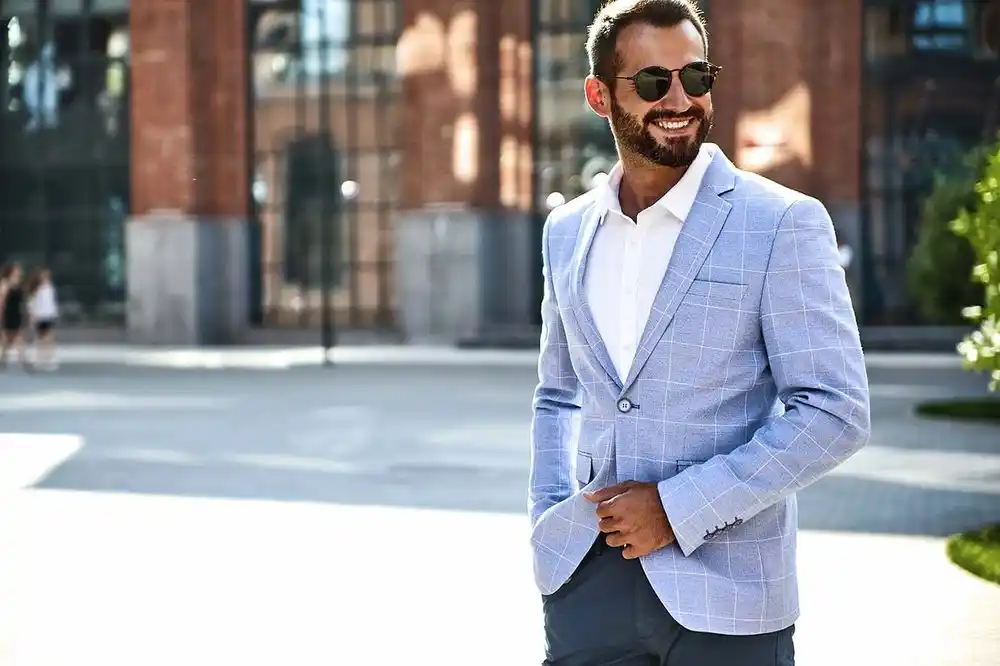
Look for fabrics under 250 grams per square meter. Lighter colors (blue, grey, tan) work well in warm weather and read fresh in daylight. Pastels suit daytime ceremonies better than heavy, dark tones.
Breathability is the priority. Avoid anything too heavy. A sweating groom is uncomfortable and doesn’t photograph well. Choose fabrics that move air and keep their structure without trapping heat.
Keep the styling timeless rather than trendy. A classic silhouette in the right weight of cloth will photograph well decades from now. A trend-forward look that dates badly won’t.
Autumn and Winter Weddings
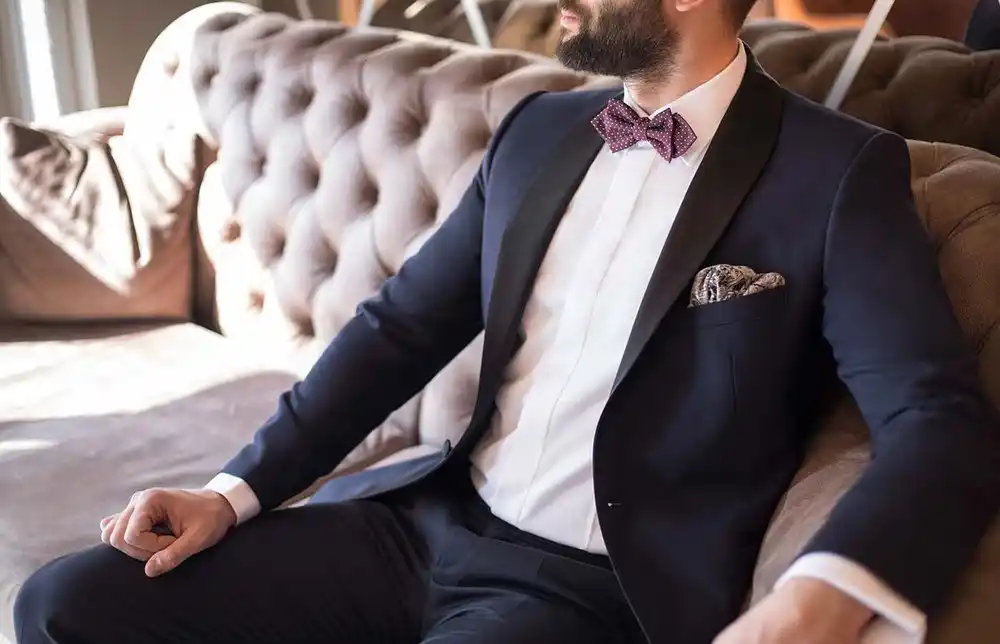
Cold-weather ceremonies open up options. Black or white tuxedos remain traditional choices. Heavier wool and wool-cashmere blends provide warmth and drape beautifully. A scarf in a complementary color adds texture to outdoor ceremony photos.
Remember: wedding pictures last a lifetime. You want to look great in all of them, not just the indoor shots.
Don’t Ignore the Groomsmen
A cohesive wedding party creates stronger photographs and a more unified aesthetic on the day. This doesn’t mean everyone needs to be dressed identically. Allowing each groomsman some individual expression while maintaining an overall visual unity tends to produce better results than forcing everyone into the same exact look.
Custom clothing for the entire party ensures that everyone fits properly, which matters considerably when you’re standing next to each other in photographs.
A Fit That Photographs Well
The camera is unforgiving when it comes to fit. Here’s what to get right:
- Shoulders: the seam should sit exactly at the break of your shoulder, no overhang
- Chest: the jacket should button cleanly with no pulling across the chest
- Waist: suppression that shows your shape without restricting movement
- Jacket length: covering the seat, sleeves showing a quarter-inch of shirt cuff
- Trouser break: slight break at the shoe, no excess fabric pooling
- Overall silhouette: the suit should move with you, not fight you
For the ceremony, button the jacket when standing at the altar. For reception photos, you have more flexibility.
A boutonniere pinned properly to the left lapel and a well-chosen pocket square complete the look in photographs without competing for attention.
Start Early
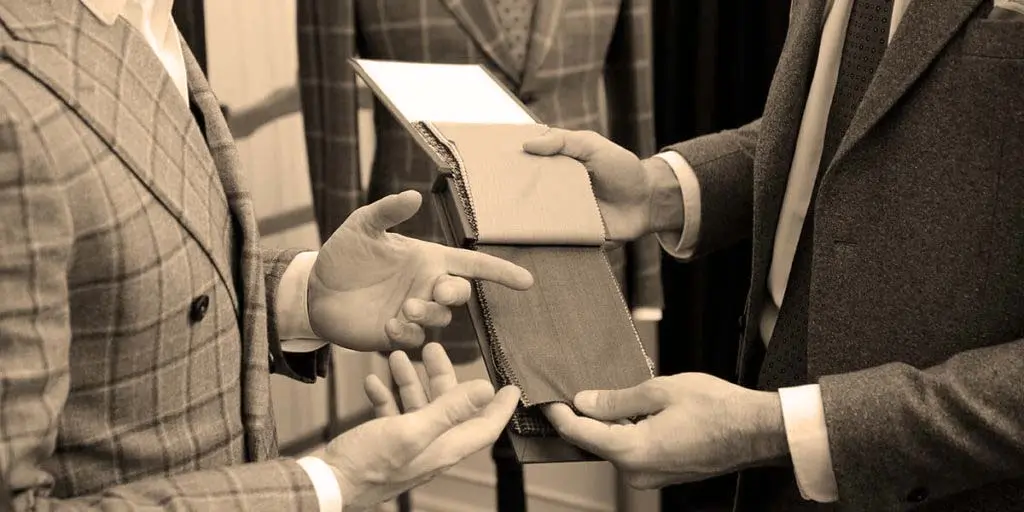
A custom tuxedo or suit takes time to build properly. Don’t leave this to the last few weeks before your date. The earlier you start, the more room you have in fabric, in construction details and in accommodating any adjustments that come out of fittings.
Part 2 covers venue-specific styling, jacket and trouser choices, colors, shirts, and accessories. Read Part 2 →
Ready to start building yours? Book a consultation.