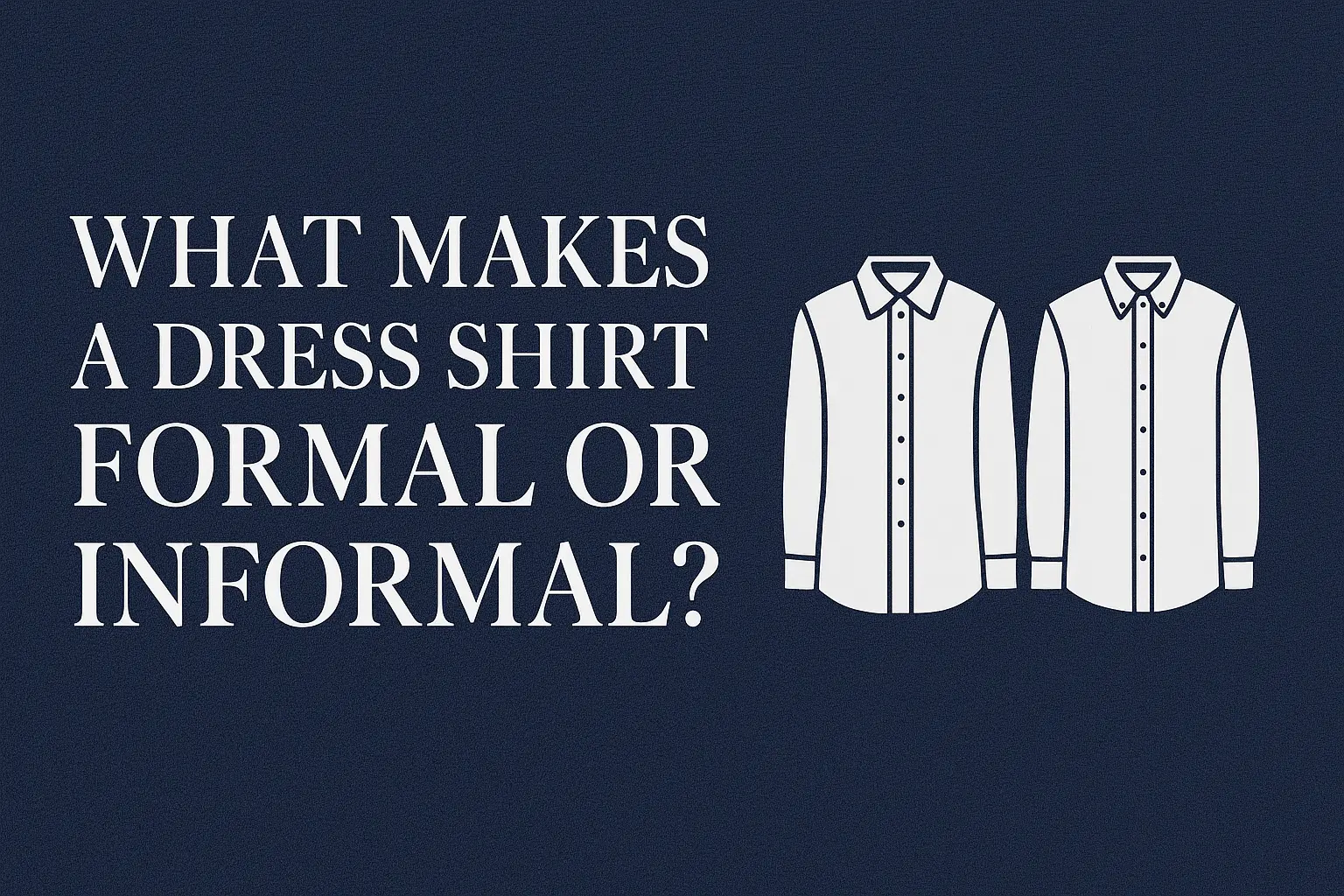
Formality is a vibe. Not a rule. And when it comes to dress shirts, that vibe is shaped by a handful of details working together, most of which people never think about consciously.
Here’s what’s actually doing the work.
Fabric First
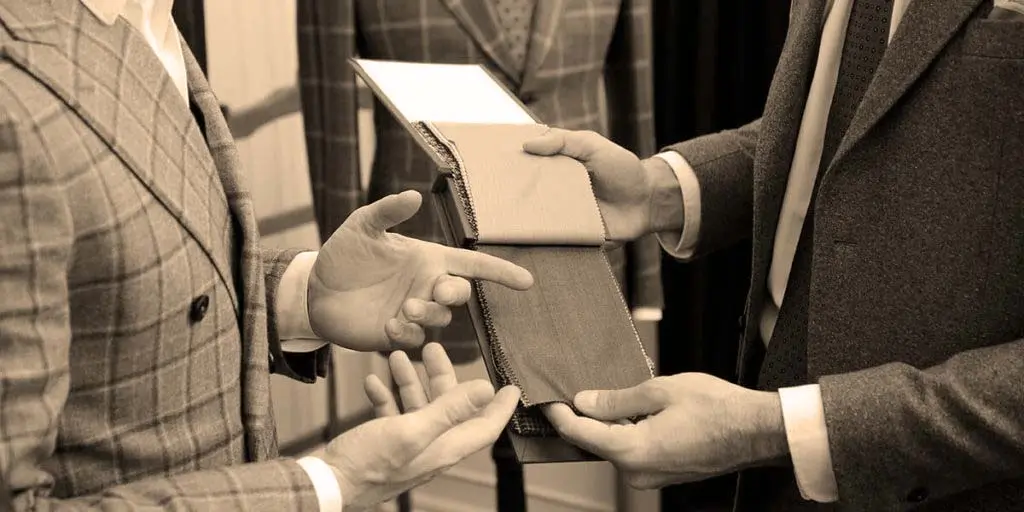
Fabric is the biggest formality signal in any shirt. Formal fabrics are smooth, tightly woven, and have very little surface texture: poplin, broadcloth, high thread-count cotton, and twill all fall here. They catch light cleanly, press crisply, and read as dressed-up.
Informal fabrics have more character: oxford cloth has a basketweave you can see and feel, chambray has a heathered softness, linen wrinkles beautifully and breathes. These aren’t lesser choices. They’re just contextually casual.
Collar Shape
Your collar sends a message before you say a word.
Spread and point collars read formal. They’re designed to work with ties, to frame the neck properly, to look correct under a jacket lapel. Wing collars belong strictly in black-tie territory.
Button-down collars are preppy-casual at best. The buttons keep the collar from flying, which is useful, but they also communicate “not trying too hard”, which is sometimes exactly right, and sometimes not. Band collars are the most casual of all.
Cuff Details
French cuffs that require cufflinks are the most formal option. They add ceremony to an outfit. Barrel cuffs (the standard folded button cuff) are the everyday workhorse and work across most contexts. Convertible cuffs can go either way depending on what you do with them.
Color and Pattern
Light and neutral reads formal. White is the most formal shirt color. Full stop. Pale blue is close behind, universally flattering and broadly appropriate.
As colors get deeper, bolder, or more saturated, formality drops. Earth tones, jewel tones, and bright colors are casual-to-smart-casual territory. Bold patterns (gingham, wide stripes, large prints) move further down the formality ladder. Subtle patterns like fine hairline stripes can stay close to formal depending on the fabric and collar combination.
Fit
A tailored, slim silhouette reads formal. Shoulders sitting at the edge of the shoulder, no excess fabric at the chest or waist, sleeves ending cleanly at the wrist. All of this communicates intention.
A relaxed fit with excess fabric, an untucked hem, or sleeves that extend past the wrist base reads casual. Fit is the multiplier that either reinforces or undermines everything else.
The Small Details
Placket construction, pocket placement, and hem shape all contribute at the margins. A reinforced front placket and no chest pocket leans formal. A curved hem designed for untucking is casual by design. These details don’t change the story on their own, but they add up.
The Cheat Sheet
| Detail | Formal | Casual |
|---|---|---|
| Fabric | Poplin, broadcloth, twill | Oxford, chambray, linen |
| Collar | Spread, point, wing | Button-down, band |
| Cuff | French + cufflinks | Barrel, convertible |
| Color | White, pale blue | Earth tones, bold colors |
| Pattern | Minimal or none | Gingham, bold stripe, print |
| Fit | Tailored, tucked | Relaxed, untucked hem |
Dress Intentionally
Knowing these signals lets you dress deliberately instead of hoping for the best. You can dial formality up or down with precision: keeping a casual fabric but pairing it with a structured collar, or softening formal cloth with a relaxed fit.
That’s the real skill. Not following rules, but understanding what every detail is communicating and using it on purpose.
If you want help building shirts that are built around how you actually dress, reach out. That’s what I’m here for.